The PNW Snow Paradox: A Fluke or Our Future?
By Jack Carter, Biology ‘26
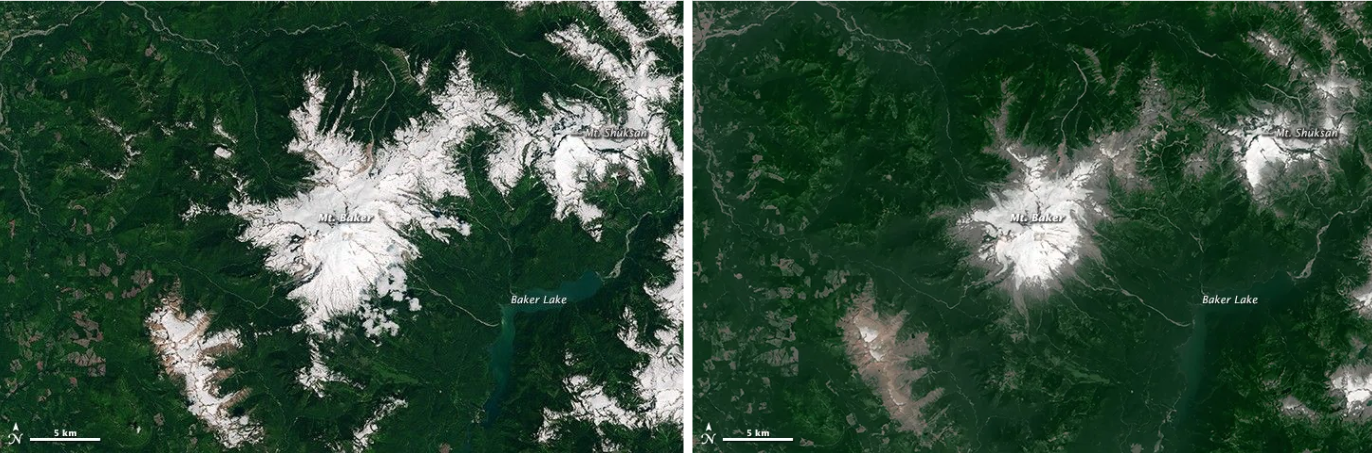
Satellite imagery of Mount Baker from a healthy snowpack in 2013 (left) to a drought year in 2015 (right). Photos from NASA Earth Observatory.
If you like to venture out in the snow and live in the Pacific Northwest, you know the speculation that comes at the start of every winter. One year it dumps feet of snow and the ski season is on until May and the next year the mountains are perpetually bare and people are hiking by February. This dynamism fuels an ongoing debate: is our world-famous snowpack disappearing, or is this just normal weather variability?
The answer to this question lies in the difference between weather and climate. Every year, our snowpack is at the mercy of the El Niño - Southern Oscillation (ENSO), a recurring tropical Pacific Ocean climate pattern. Generally, a La Niña near will bring a cooler and wetter winter that gives us heavy snowfall while El Niño years tend to have higher temperatures and lower precipitation, leaving our mountains dry. These natural cycles create considerable variability, making it challenging to separate short-term noise from long-term patterns in the climate record. For instance, a La Niña year with massive snow accumulation can easily mask the slower and quieter changes happening in the background.
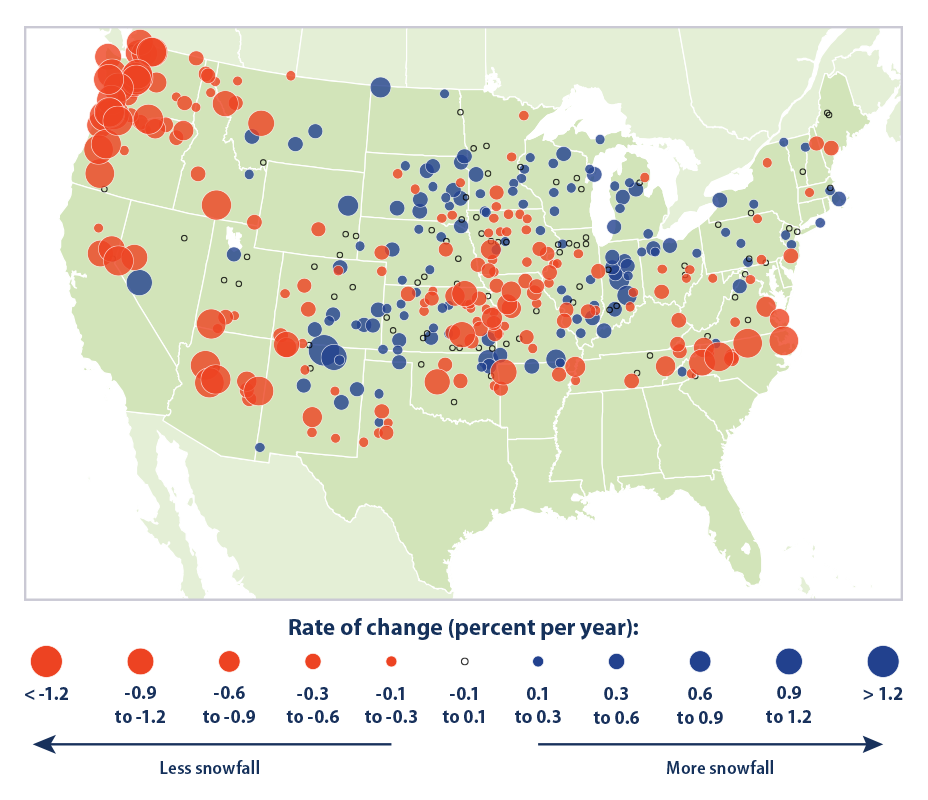
A figure for rate of change in snowfall in various locations across the United States. Photo by Kunkel et al. (2009).
A closer look at the climate data suggests that we are not losing precipitation, we are losing the cold. As global temperatures rise, freezing levels in the mountains move to higher elevations, turning snow into rain in many areas in the mountains. According to a report by the University of Washington’s Climate Impacts Group, we aren't just facing a mild dip in snowpack; North Cascade snowpack averages are projected to decline 38-46% by the 2050’s.
This isn’t just about skiing, data shows a shift to an earlier snowmelt by one to three weeks in some areas. This early flush is dangerous because the snowpack stores water to be dispersed throughout dryer summer months; if it melts in March instead of May, late summer droughts increase the risk of wildfire and threaten Pacific salmon populations as streams run low and warm.
So while the snow won't vanish this winter or the next, the baseline is shifting. We are not losing snow because our clouds have run dry, we are losing it because the PNW is warming enough to turn a heavy snowfall to a rainstorm.