
Prison Labor Coming Under Fire: How Climate Change has Created Opportunity and Exploitation
By Phoebe Berghout, Aquatic and Fishery Sciences ‘26
Climate change is bringing more frequent and extreme wildfire events to the western United States. With the average annual area burned by high severity fires increased by 8 times that of the mid-1980’s, state and federal governments are struggling to keep pace. The United States Forest Service (USFS) lost nearly half of its permanent workforce between 2021 and 2024. Despite claims of being “fully staffed”, more than a quarter of firefighting positions at the USFS remained unfilled in July 2025, mid-fire season. These shortages often cause state governments to turn to prison labor during these fire events. Roughly 30% of crews consist of incarcerated laborers that combat wildfires in California alone.
Incarcerated firefighters are typically paid one dollar on the hour, although this varies from state to state. However, in many states this lack of compensation is changing. A 2025 California law now requires prisoners on hand crews must be paid the federal minimum wage of $7.25. Nevada voters passed a measure that no longer requires incarcerated individuals in state prisons to be forced to work. Despite this, many states lack protection and adequate compensation for the people keeping us safe throughout natural disasters.
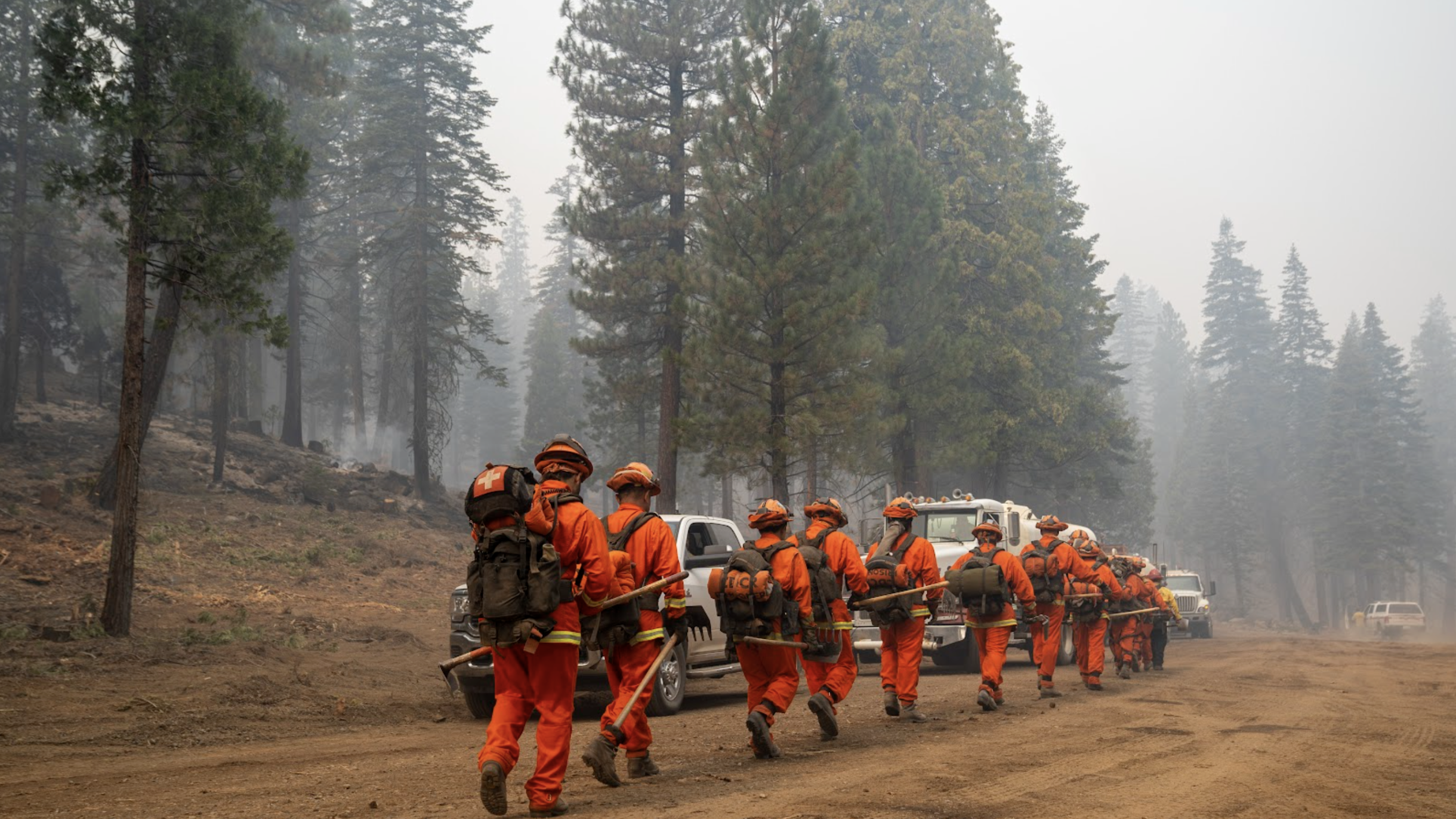
Firefighters on the Dixie Fire, Lassen National Forest, California. Photo from Flickr.
Many have identified the use of carceral firefighting practices as rooted in slavery and the practice no-doubt exacerbates racial inequity. The job also can have extreme long term physical and mental health effects. High rates of cancer and cardiovascular disease, along with depression, substance abuse, and post-traumatic stress disorder are all evident in the wildfire community. Nevertheless, for many incarcerated individuals, fire fighting offers a point of pride and a path to work after leaving prison. Bay Salmeron of CalFire works to train firefighting crews composed of formerly incarcerated individuals. CalFire is amongst many programs across the western US that offer something hard to find for those leaving prison––a chance at gainful employment. Salmeron, along with other previously imprisoned fire fighters, notes the contrast the job provides from societal messages they’ve received about incarceration. In an interview with Radiotopia’s Earhustle, Salmeron shares that everywhere he goes people thank him for his service. He says he is “so grateful and humbled by the fact that I was once an example of how not to be, and that is not me today”. Eddie Herrera Jr. shared similar sentiments in an interview with High Country News, saying when fire fighting “I felt a sense of pride, because I knew that I was not being defined by my circumstances.”
Climate change is not only intensifying the fire season, but it’s also stress testing the labor system weighed with responding to it. While fire fighting provides opportunity post-incarceration, many governments are exploring moving beyond a reliance on prison labor to fight fires. Proposals for a centralized National Wildfire Service and labor reform, inter-state resource partnerships, and new technology ranging from aerial fleets and LiDAR, all move away from the status quo. The wildfire crisis is not only an environmental emergency, but also a labor one, ultimately revealing who is absorbing risk and at what cost.
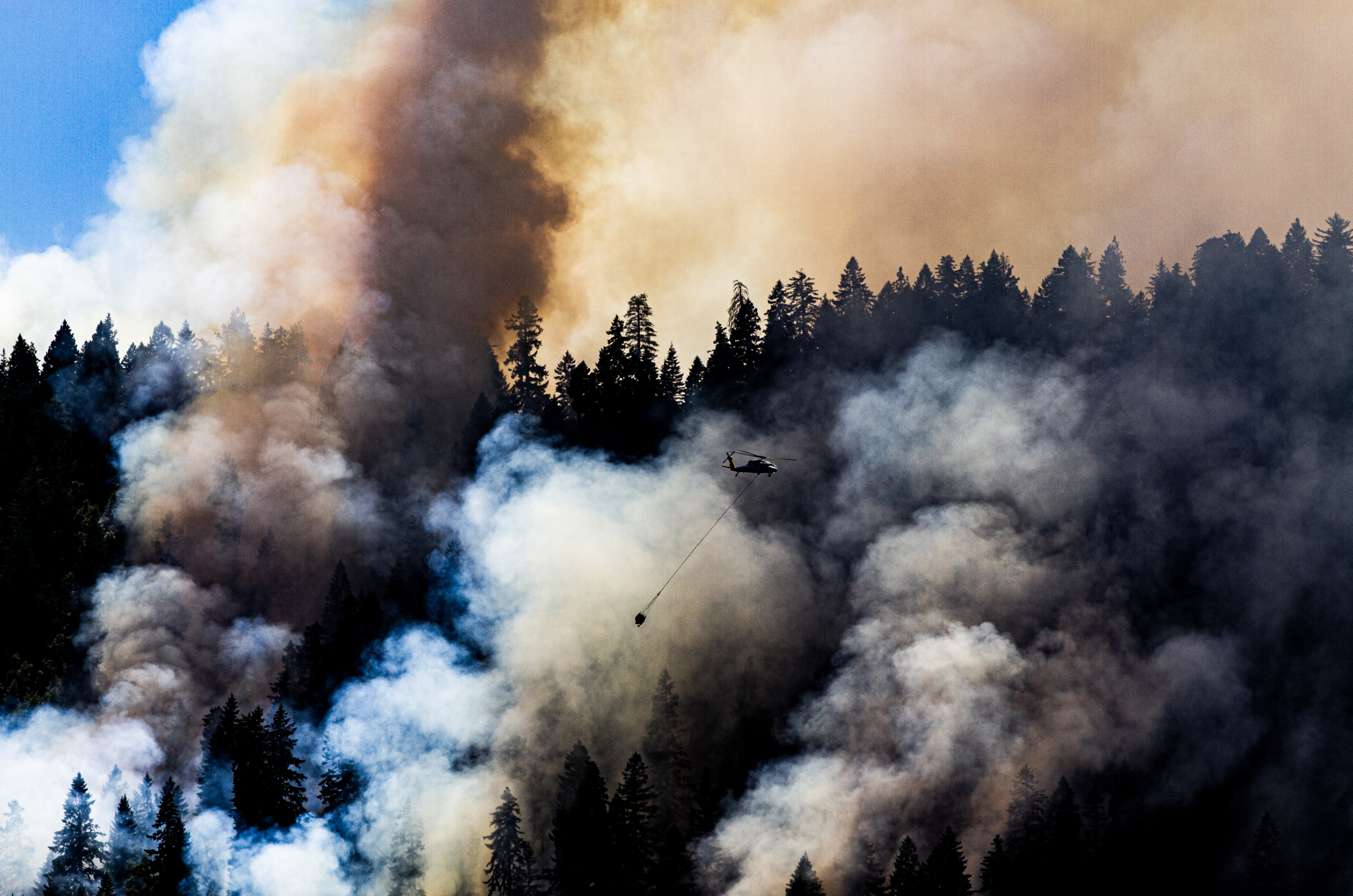
Rum Creek Fire burns Northwest forest. Photo by Oregon Bureau of Land Management.