
Slaughter For Salmon
By Ben Kuhl, Marine Biology ‘26
Salmon lies at the heart of culture, industry, and tourism in the Pacific Northwest, but these iconic fish come at the cost of others. As a result of their significance, salmon are so often prioritized over other species that can disrupt their populations and growth. The balance of species so often tips to the side of profit over others’ intrinsic right to exist. This prioritization of salmon has even gone so far as to use lethal removal against predatory or nuisance species.
Large-scale culling has been a controversial management strategy since 1949, when major culling of basking sharks throughout Salish Sea occurred on behalf of the salmon industry. These gentle giants were systematically killed as a frequent nuisance for vessels by causing collisions and entangling in salmon gillnets. A fervent campaign against basking sharks began in 1949 when Canada’s federal fisheries departments declared the sharks “destructive pests” until 1969 when not a single sighting of the shark was reported for the whole year. Over the 20-year-long campaign, the estimated number of sharks killed ranges between 1,000 to 2,600 individuals, effectively eradicating the entire population. At the time it was considered a successful pest removal, but nowadays, it’s seen as a tragic loss due to industry and greed.
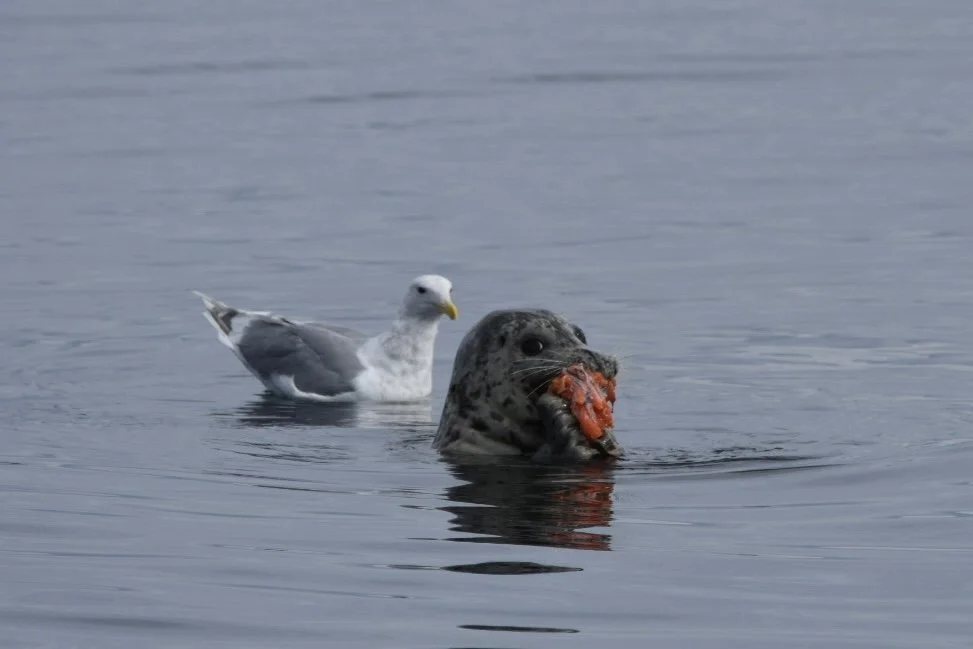
A harbor seal (Phoca vitulina) feeding on a salmon (Oncorhynchus spp.) as a glaucous-winged gull (Larus glaucescens) watches. Photo by Faith Jayaram.
In recent years, an initiative to allow the culling of seal and sea lion populations in the Puget Sound area has become a major point of contention. A proposal reasons that these pinnipeds are major predators of salmon throughout the Puget Sound and in several rivers salmon use to spawn. One of the main bills proposed amends the Marine Mammal Protection Act to allow the lethal removal of any sea lion and seal. Supporters of the bill state that the unregulated pinniped populations are a major threat to migrating salmon populations, while opponents claim that pinniped populations are not left unchecked but rather directly preyed upon by the Biggs’ killer whales.
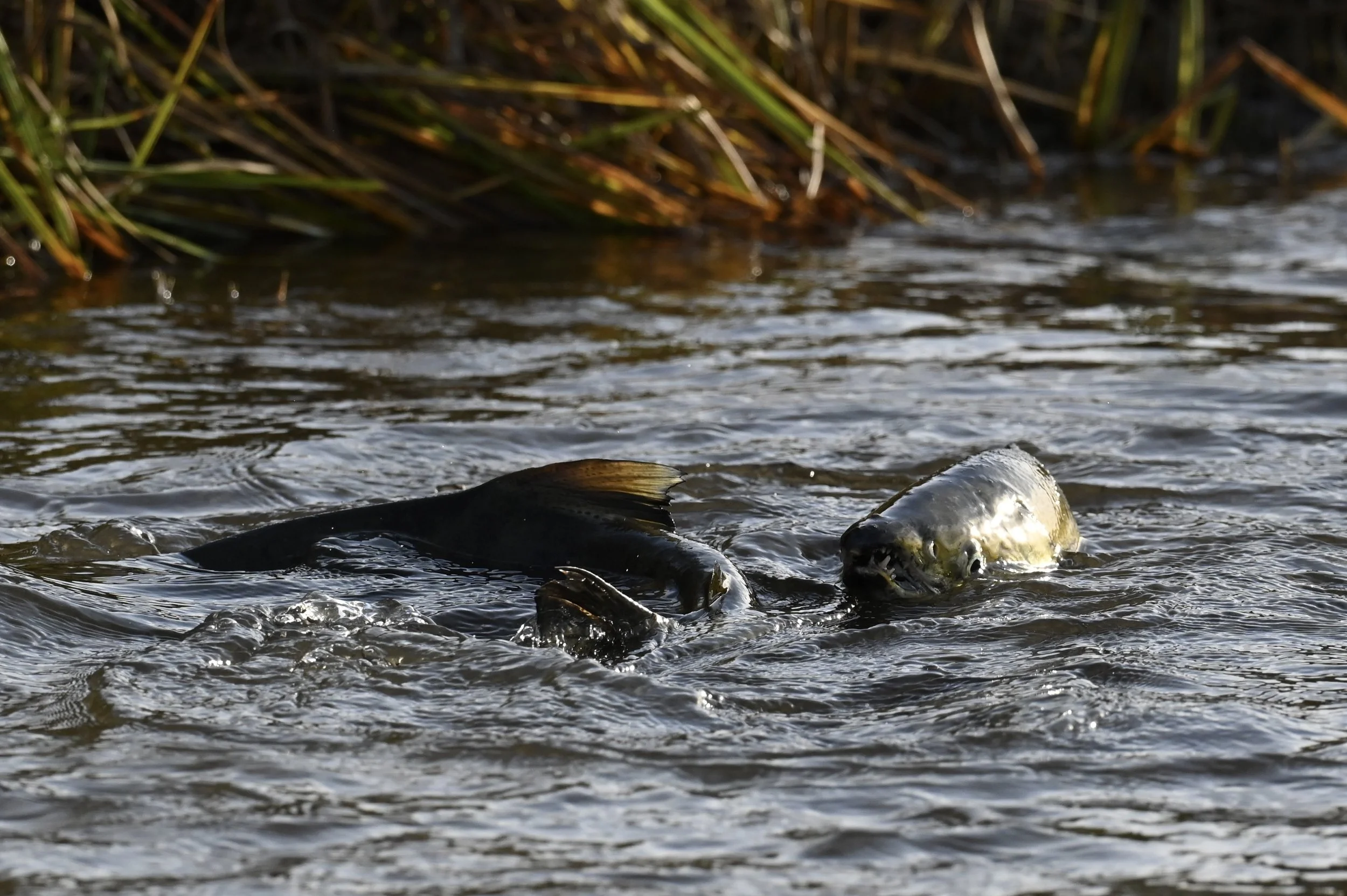
A chum salmon (Oncorhynchus keta) migrating upstream at Carkeek Park. Photo by Faith Jayaram.
Less iconic and charismatic fauna, such as the northern pikeminnow, don’t win the fish popularity contest. An active effort in salmon predator removal is the northern pikeminnow fishery bounty program that focuses on the Columbia and Snake rivers. Northern pikeminnow (different from invasive northern pike) are a native predator of juvenile salmon that often congregate behind dams. In its 35-year run, the program has resulted in the fishing of 5.3 million northern pikeminnow. The lucrative nature of the program and their designation as “pest” means that they have little public support.
Extensive culling of other animals for the benefit of salmon has a long history in the Pacific Northwest, but can it be avoided when other options are available? Dam removal and habitat restoration have proven to be highly effective. The intrinsic value of animals is often overlooked in management and legislation. Policymakers and stakeholders tend to focus on ecosystem services or economic benefits when deciding on ecological policies. For salmon, it means weighing a cultural and economic icon against all the other animals that are a threat to them.