Barking Up the Right Tree: Dog Parks & Urban Greenspace
By Callie Murakami, Aquatic & Fishery Sciences ‘26
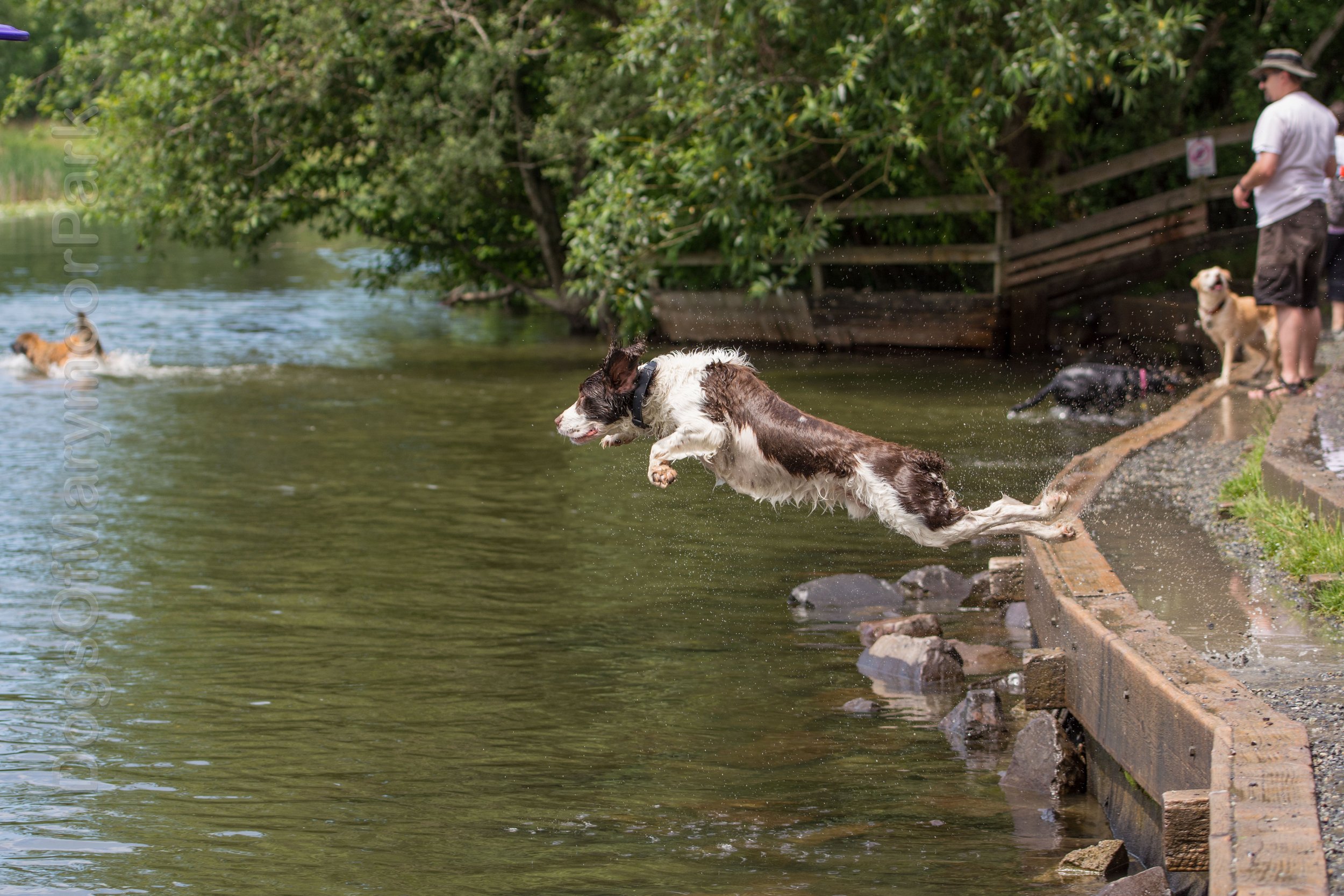
Dogs leap into the water from one of Marymoor park’s many riverside access points. Photo by Bob Scola, CC BY-SA 3.0.
Dog parks are one of the fastest growing public amenities in the US, with a 40% increase from 2009-2020. These parks provide needed room for exercise and socialization for the over 45% of households in the US that own dogs. But these parks are not just for dogs - they are also much-needed green spaces that can offer a breath of fresh air amidst busy urban centers. In Seattle, several degraded and underutilized areas have been transformed into dog parks that give the land a new life and revitalized purpose.
Still, these parks come with a host of other considerations. According to a park planning and management study, pet waste in parks can cause contamination and eutrophication issues to nearby waterways. Additionally, parks can spread diseases and parasites between animals, including wildlife, and off-leash dogs may disrupt breeding and feeding behaviors of wildlife.
Can thoughtful park management reduce these risks? Perhaps. Just take a look at Marymoor off-leash dog area in Redmond. This highly rated dog park contains 40 acres of well-maintained trails, fields, forest, and riverside access. The park is upkept by Serve Our Dog Areas (SODA), a non-profit organization that dedicates thousands of volunteer hours into restoring park habitat, trails and amenities. They take on important jobs in upkeeping vegetation and riparian areas, along with the less glamorous job of “clean team” that makes use of the SODA-provided doggie waste bag stations around the park.
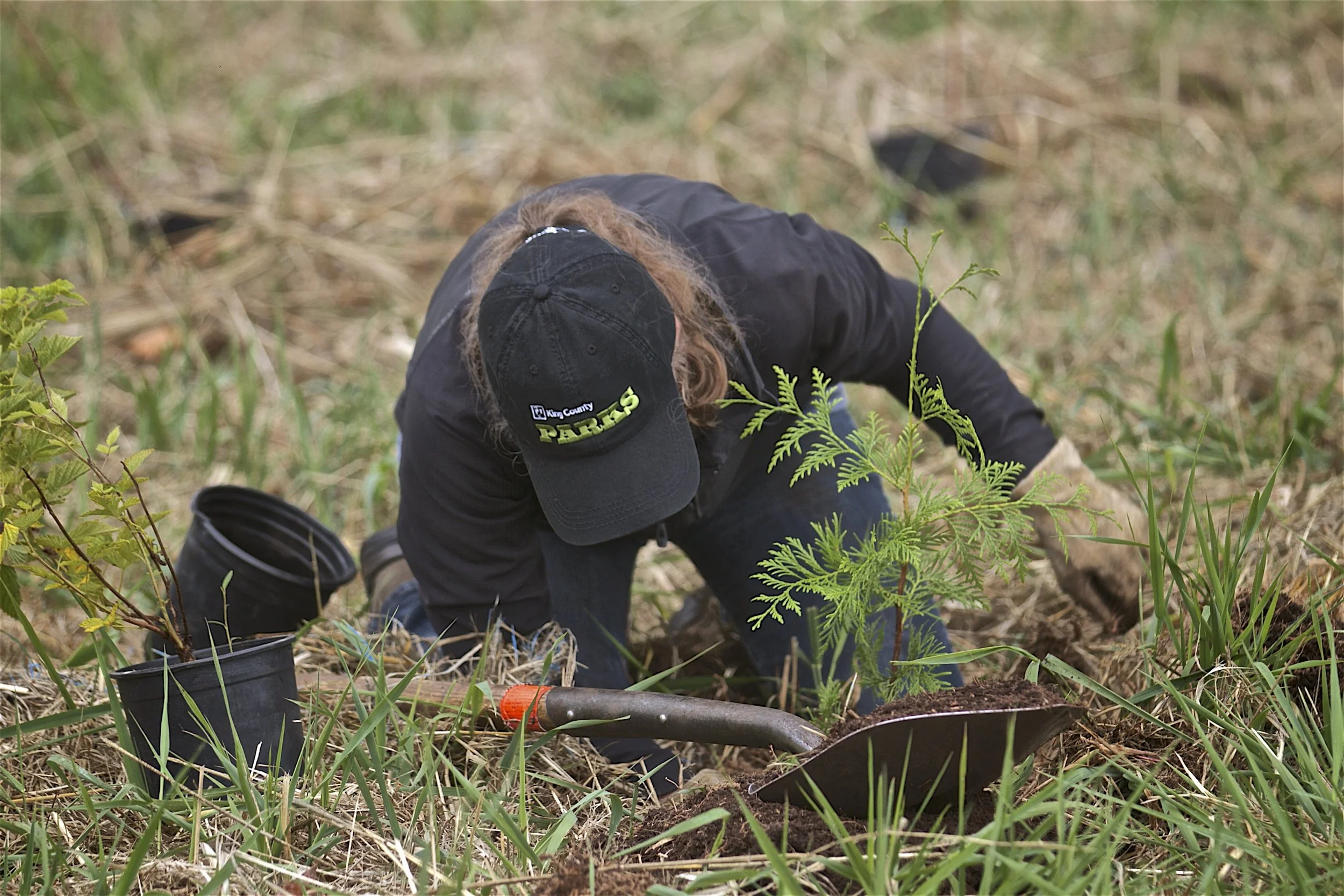
Natural areas in Marymoor park are upkept by King County Parks and volunteers. Photo from Flickr, King County Parks.
They also take seasonal measures to limit dog-wildlife interaction in sensitive times. During breeding seasons, SODA fences off land under the park’s great blue heron nesting trees, keeping dogs out of the area below. They also deploy floating booms in the water to discourage dogs from swimming far out when there may be salmon migrating in the fall. Throughout the year, the park's 800,000 annual visitors can still observe bald eagles, hawks, waterfowl, songbirds along the thriving Audubon Bird Loop that runs through the park along the Sammamish River.
In growing urban landscapes, these parks could easily become offices, stores, or parking lots. Instead, off-leash areas preserve green space, provide habitat for urban wildlife, and foster community engagement with local environments. These parks are open to you with the expectation that you respect the nature, stick to the paths, and for Pete’s sake pick up after your pet. So whether you're a student missing your family pet or just looking for a new nature walk spot, dog parks could be your next adventure with a lot of wagging tails along the way.