
World Cup vs. World Impact
By Alexa Lavinder, Earth and Space Sciences ‘26
The streets of Seattle are beginning to buzz in anticipation of the 2026 FIFA World Cup, yet projected greenhouse gas emissions predict this tournament to be the most polluting World Cup in the event’s history. With an unprecedented number of matches spanning sixteen cities of North America, the tournament has raised serious concerns about the environmental cost and ethics of hosting sporting events at this scale.
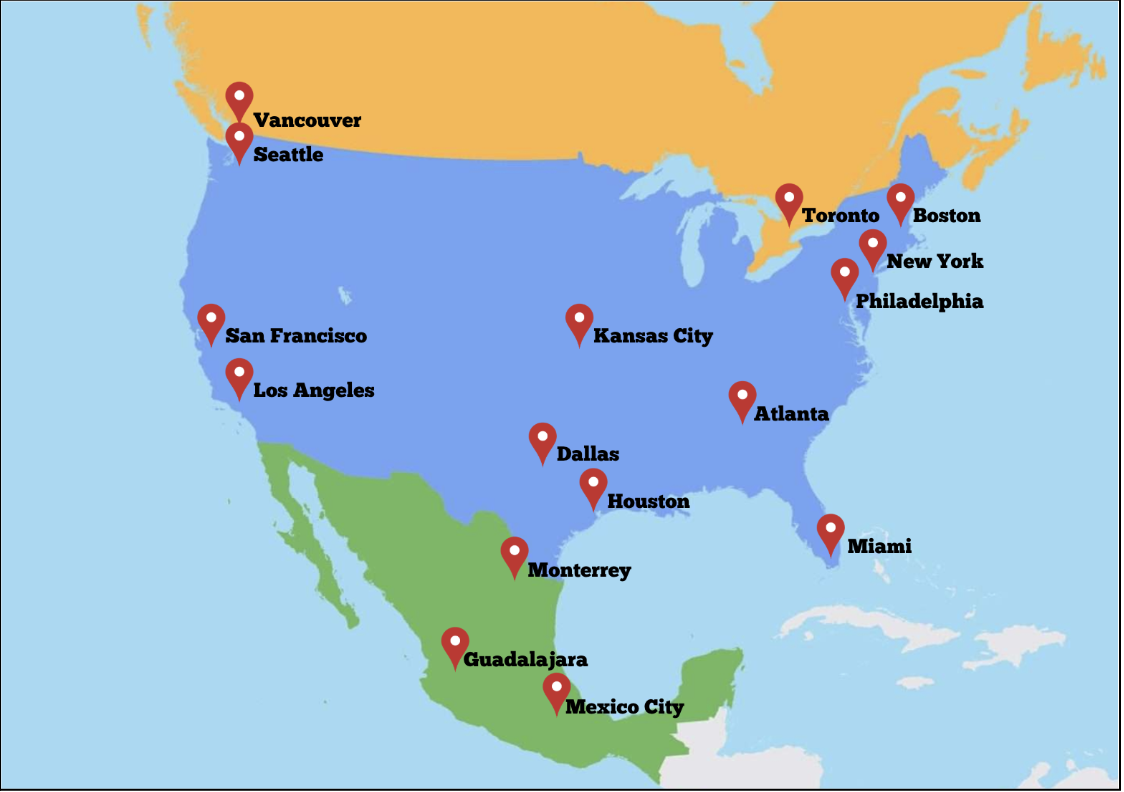
2026 World Cup host cities. Photo by Alexa Lavinder.
FIFA’s Climate Strategy outlines the Association’s goals regarding climate action, including a 50% reduction in carbon emissions by 2030, and reaching net zero emissions by 2040. FIFA President Gianni Infantino reinforces these goals with the statement that “FIFA will reduce its resource consumption, as well as consolidate and further improve its management of environmental risks, obligations and opportunities with the aim of mitigating any negative impacts on the environment.”
In contrast with these ambitions, a recent study conducted by Scientists for Global Responsibility (SRG) revealed that the North American World Cup will generate a 92% increase in carbon dioxide equivalent emissions compared to the typical emissions of World Cups from the years 2010 to 2022. Beginning in 2026, the tournament will expand from 32 competing teams to 48, increasing the number of matches from 64 to a whopping 104.
While FIFA has framed this expansion as a means to improve team and fan experience, player welfare, and sporting integrity, critics question whether this rationale masks a more profit-driven motive. The associated transportation of teams and fans to these additional games throughout the United States, Canada, and Mexico is the primary driver of increased tournament emissions, directly defying FIFA’s commitment to mitigate negative impacts on the environment. Additionally, a sponsorship between FIFA and Aramco, a Saudi Arabian Oil Company, is projected to drive sales for the fossil fuel company, resulting in the emission of an additional 30 million tons of CO2 equivalent. Both the expansion of the tournament and the increased exposure for a fossil fuel advertisement demonstrate FIFA’s disloyalty to their commitment to action, and overall apathy for the state of our environment.
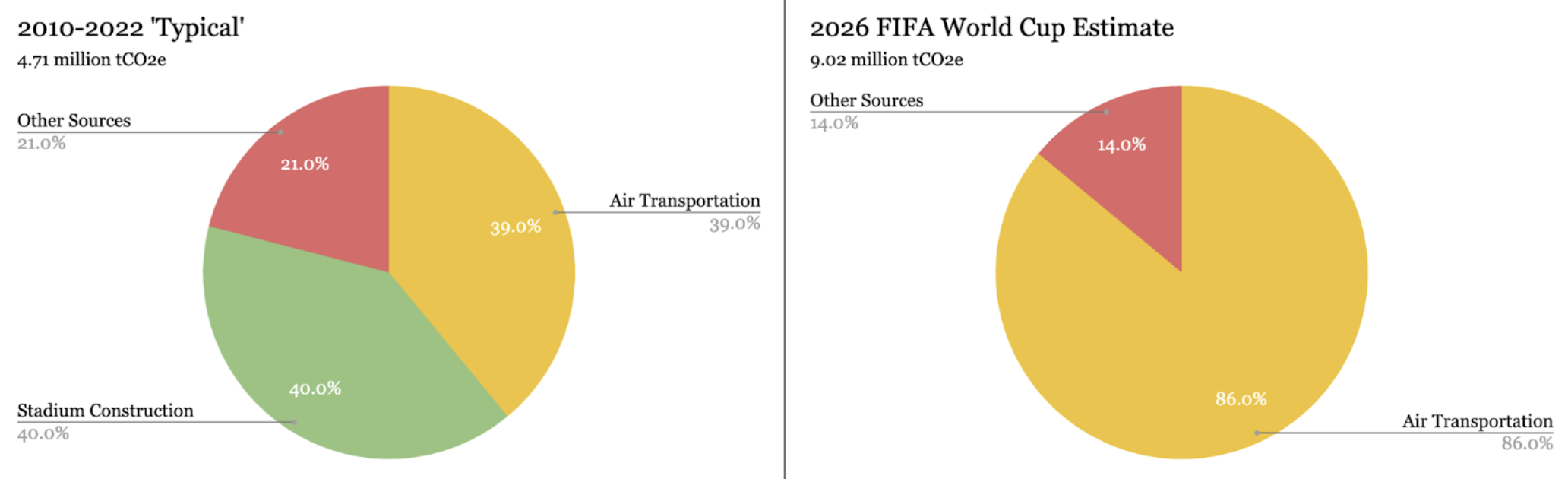
Comparison of SRG’s 2026 FIFA World Cup emissions estimate to the 2010-2022 ‘Typical.’ Photo by Alexa Lavinder.
In order to reduce these unprecedented emissions, Scientists for Global Responsibility urge FIFA to end commercial partnerships with high-pollution companies like Aramco, reverse the recent tournament expansion, and establish binding environmental standards. Dr. Stuart Parkinson, a lead author on the aforementioned SRG research study, sums this call to action up simply with the statement: “With the climate crisis rapidly deepening, the only sensible response is for FIFA to take immediate action to markedly reduce tournament emissions.”
While pressure mounts for FIFA to enact meaningful, top-down reforms, the responsibility for mitigating the tournament’s environmental impact also extends to host cities. As host to six tournament matches, Seattle is actively working to deliver a FIFA World Cup event that is in accordance with our region’s green values. A local organizing committee titled SeattleFWC26 has developed sustainability strategies that revolve around “leveraging Lumen Field’s environmental expertise and incorporating Indigenous guidance.” Although we can applaud any step towards more sustainable practices, a few recycled aluminum cups will not reverse the projected damage to be done. In the race between climate action and profit, the 2026 World Cup may reveal which one FIFA is truly willing to lose.