
Your New Hobby: Seattle's Squidding Scene
By Sage Mailhiot, Environmental Science & Terrestrial Resource Management ‘26
As winter sets in to Seattle, fresh squid is on the menu. Each year, a population of market squid, or Loligo opalescens, make the migration from the Pacific Ocean to the Strait of Juan de Fuca and into the Puget Sound to spawn, from November through February. Awaiting them on piers throughout the Seattle-Tacoma area are squid fishers – or, jiggers – of all ages and backgrounds. Some have been jigging for generations.
The recreational hobby of squid jigging took off in Seattle in the 1970’s, when several colliding factors aligned – just as Washington Dept. of Fisheries finished constructing fishing piers in Edmonds, Seattle, and Tacoma, a member of the Tengu fishing club brought a squid lure back from Japan. Soon tackle shops throughout Seattle were selling squid lures – or “jigs” – which are characterized by the ring of hooks around the base as opposed to just one. Additionally, around this time, Seattle became home for hundreds of Vietnamese refugees, for whom jigging was a familiar skill, and squid a familiar dinner. The Puget Sound provided.
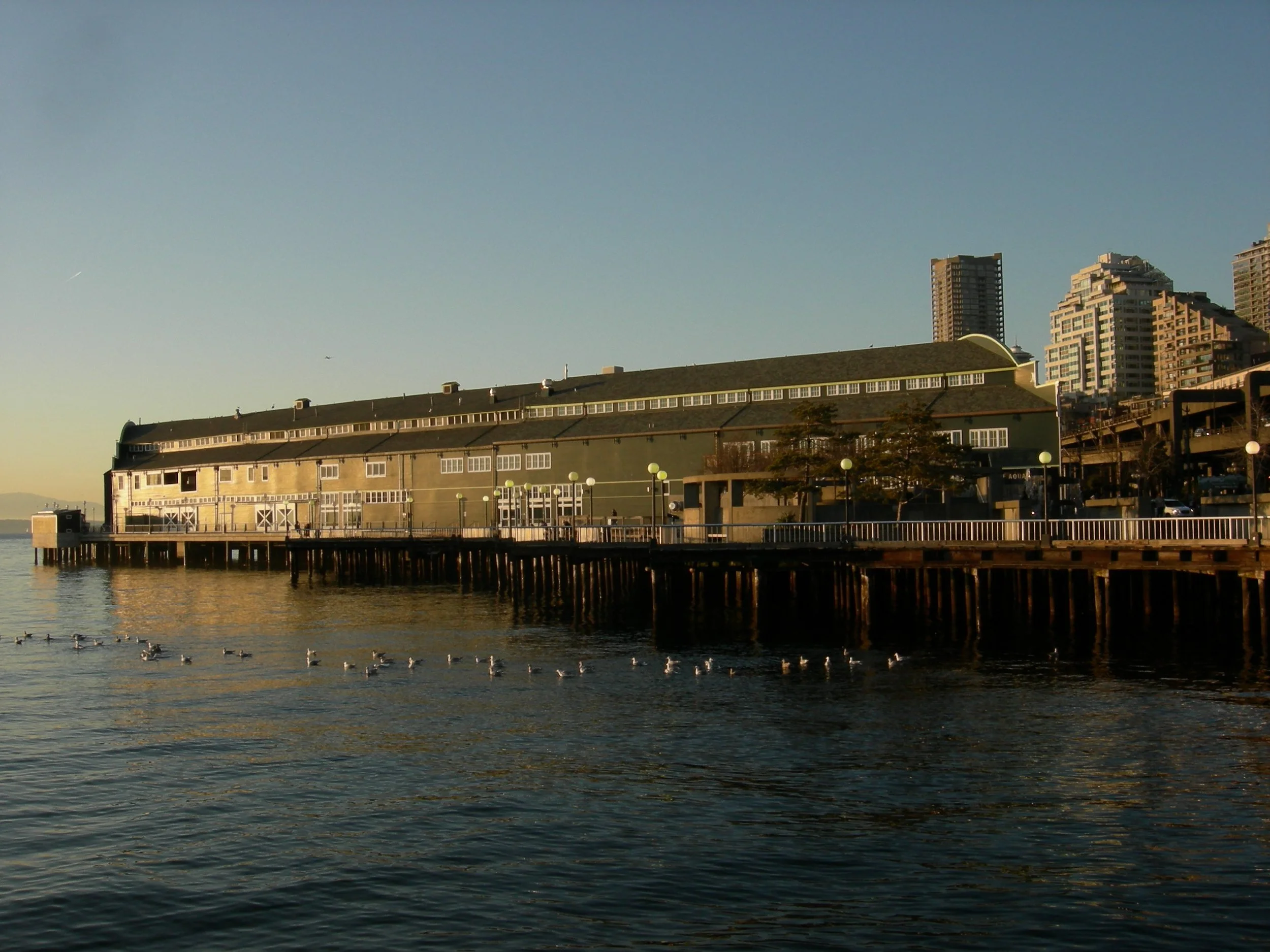
Seattle pier. Photo by Joe Mabel.
The community continues to grow still, nowadays encompassing everyone from old retired fishermen and college students. Squidding, unlike fishing, does not require much hardware nor expertise – just a rod, reel and jig, along with an affordable shellfish license (yes, squid are mollusks)! For decades, squidding has been an accessible way to source your own food. But why go to all the trouble, when you can buy calamari squid for $7.00 at Safeway?
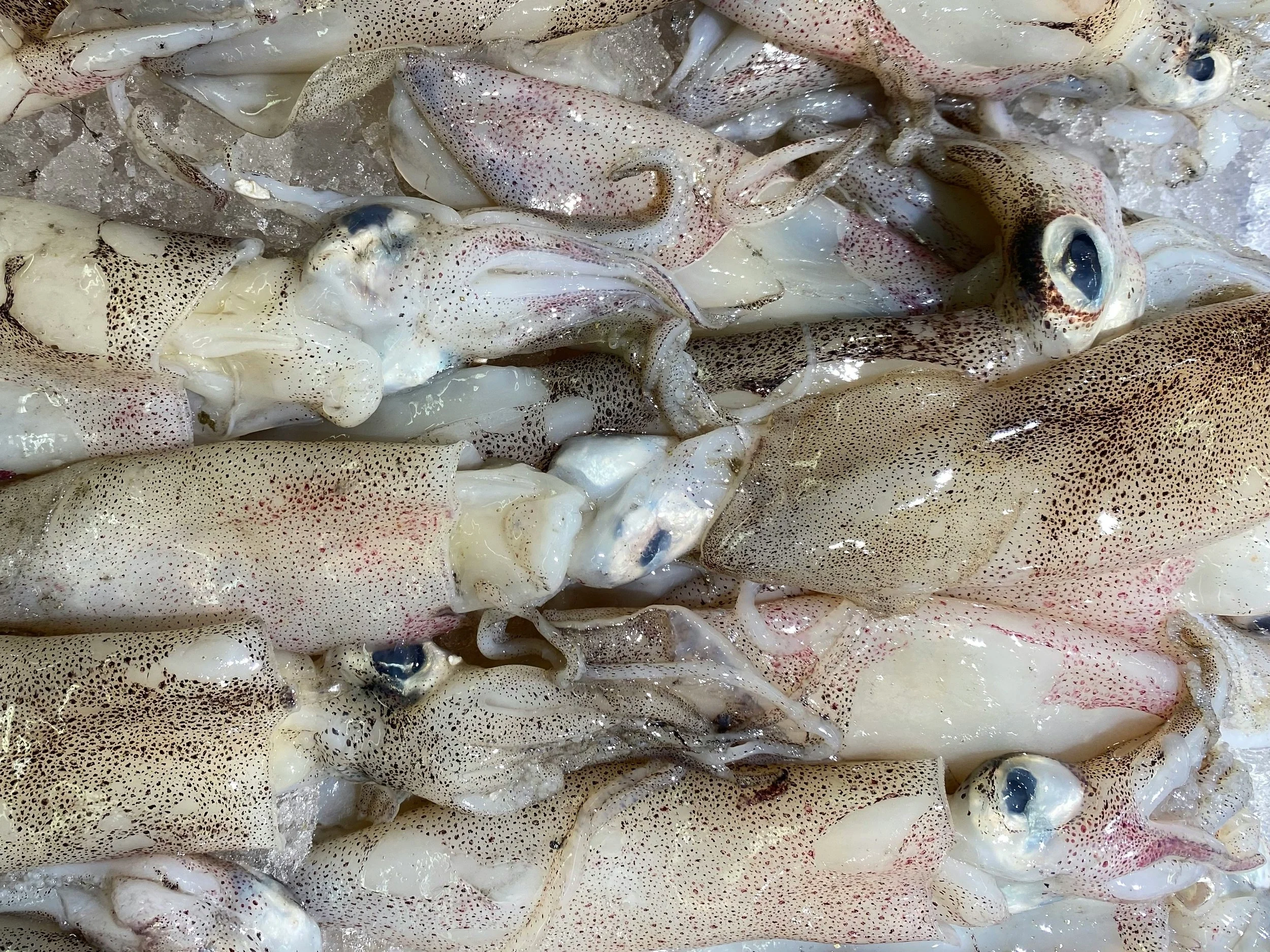
Market squid. Photo by John Cameron.
The question is much larger than squid. In this altered reality that provides us with perfect tomatoes year-round, what exactly do we gain by starting a garden? Or by digging around the forest for mushrooms? To seek answers, I turn to the internet influencer and 2022 winner of the James Beard Award, Alexis Nicole Nelson, known as @blackforager on Youtube and Instagram. In Nelson’s content, she encourages viewers to explore the edible world just outside their door.
Sourcing your own food reduces plastic consumption and the carbon footprint of long shipping routes. For Nelson, foraging is also about reclaiming connection to the land. In an interview with NPR, Nelson speaks to the ways that no-trespassing laws have obstructed poor people and people of color from gathering their own foods. In the history of Seattle angling, there are echoes of this story – the Tengu fishing club was founded after Japanese Americans were denied entrance to fishing tournaments. In the last few hundred years, being close to our food’s origin has been made a privilege.
An urban dweller often encounters more barriers to fresh, self-sourced foods than rural Americans do, but foods like squid do not require one to travel very far, or possess many assets to engage in reciprocity with the land. If squid isn’t for you, come springtime, head to any of Seattle’s parks to forage for fiddleheads. Summer comes with the endless bounty of ripe (and invasive) Himalayan blackberries. Mushrooms can be found throughout Seattle in the fall, if you know what you’re looking for. The city provides.
Check out the video above to see some squid caught by Sage!