
The Cloud is Thirsty: Digital Growth is Outpacing Water Systems
By Cate Miggins, Environmental Studies ‘26
Every message sent, movie streamed, and file stored in the cloud depends on a physical reality we rarely acknowledge: fresh water. Data centers are the industrial backbone of digital life, and water keeps that backbone functioning. The issue is not choosing between digital services and water security, but that digital infrastructure is expanding faster than the public institutions that manage the water and energy systems it relies on.
The current boom did not begin with artificial intelligence, but AI has accelerated it. Hyperscale data centers operate continuously at enormous capacities, driving rising demand for electricity, cooling, land, and transmission infrastructure. U.S. data center capacity is projected to grow 20 to 25 percent annually through 2030, with hyperscale facilities responsible for roughly 70 percent of that expansion. Efficiency gains in chips and cooling systems are real, yet total energy and resource use still climbs because overall computing demand keeps increasing.
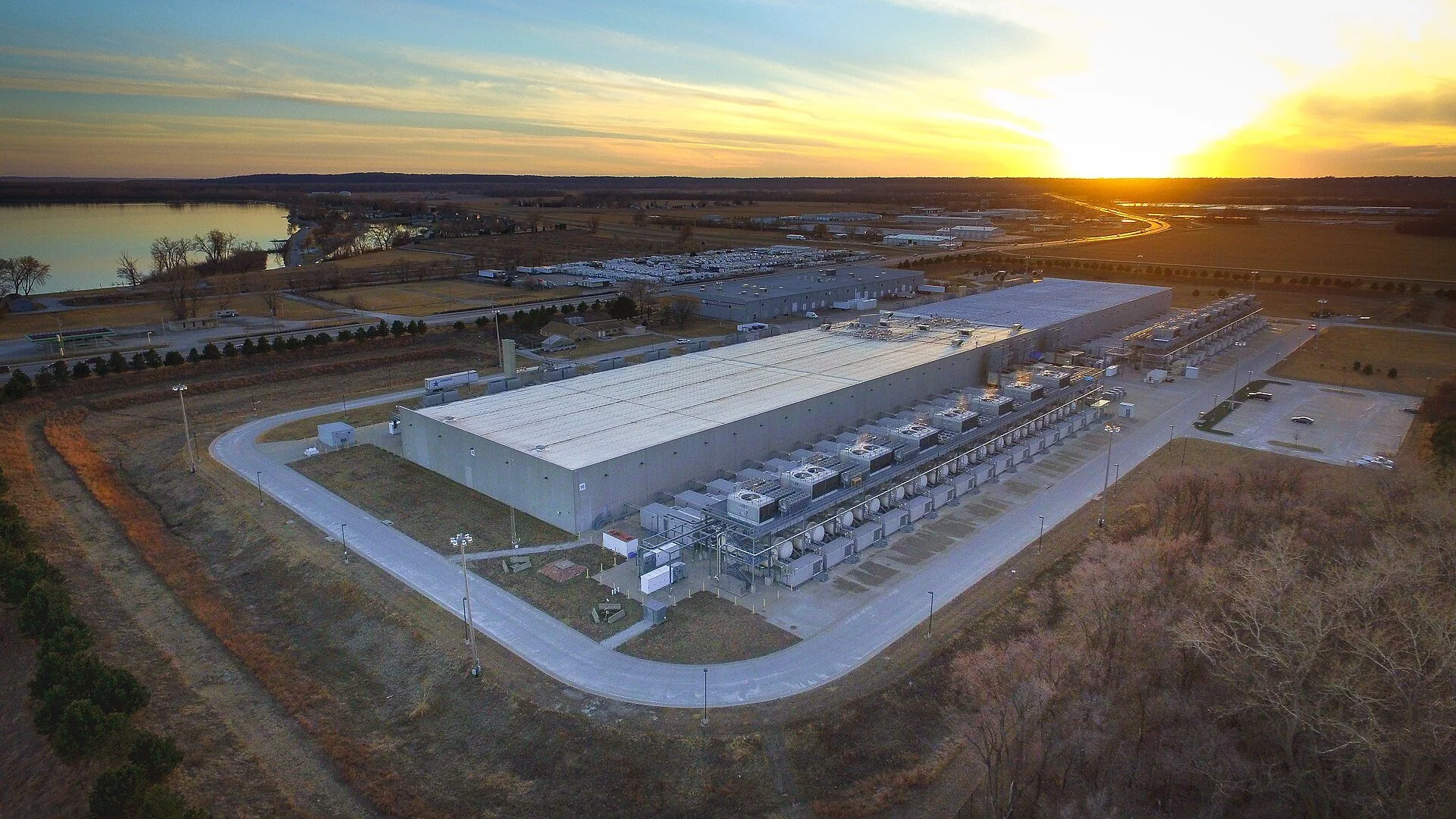
Data center operations rely on water intensive cooling systems to manage the heat generated by nonstop computing. Photo from Wikimedia Commons licensed under CC BY 2.0.
That escalating energy use leads directly to heat, which makes large scale cooling systems essential. Servers contain electronic components that move electricity to process data. When electricity flows, heat is produced, like a laptop warming up during use. In data centers, thousands of machines run nonstop in tight spaces, so heat accumulates rapidly. Continuous cooling protects equipment, reliability, and uptime. If intake air temperatures exceed recommended ranges, components degrade faster, error rates rise, and systems can shut down to prevent damage
Many facilities use evaporative cooling systems that consume fresh water directly. Even air cooled or closed loop systems depend heavily on water indirectly, because generating the electricity that powers servers requires large volumes of water at power plants.
U.S. data centers directly consumed about 21 billion liters of water in 2014 and roughly 66 billion liters by 2023. When water used for electricity generation is included, the national indirect water footprint is more than 12 times larger than direct cooling use. Much of this water comes from the same treated municipal supplies households depend on, placing digital demand inside everyday community water budgets.
Local governance has struggled to respond as this industrial demand enters public water systems. Companies and utilities often invoke trade secret or confidentiality claims to withhold facility level water data, leaving communities without clear information about withdrawals, contracts, or drought contingency terms. Residents in several regions have obtained details only through litigation or public records requests. This limits informed participation in rate setting, allocation decisions, and drought planning, especially in areas already facing groundwater depletion, climate driven scarcity, or rising municipal demand.
Public records laws and the federal Freedom of Information Act allow researchers, journalists, and residents to request water use reports, supply contracts, and permits tied to data centers. These documents show how much water facilities use, where it comes from, and how risks are shared during shortages. If the cloud runs on public water, the public should see the meter.
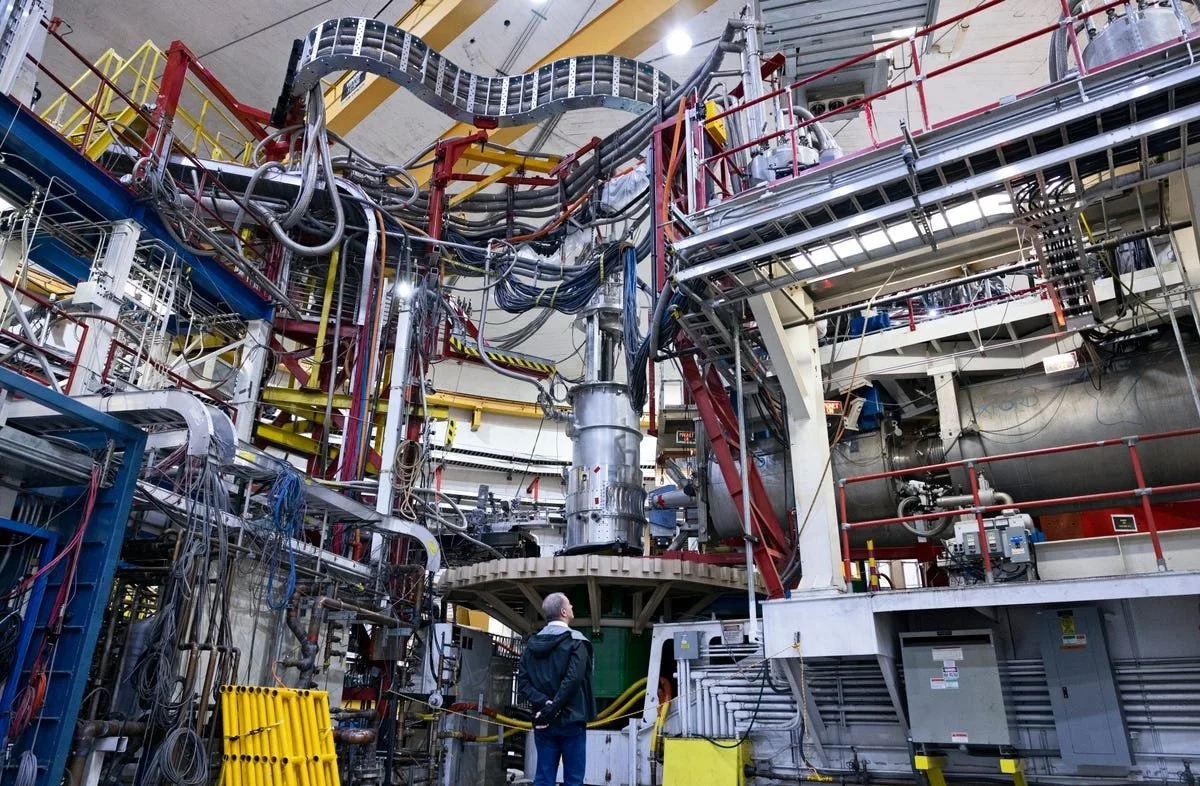

Data centers are not villains. They support health care, finance, logistics, and communication, and companies are investing in reclaimed water and efficiency. But voluntary action cannot replace transparent, enforceable rules aligning digital growth with sustainable water allocation.
Digital growth feels weightless. Its water footprint is not.