
Rough Seas for Offshore Wind: The Legal Battles Shaping U.S. Offshore Energy Development
By Xander Smith, Environmental Science and Terrestrial Resource Management ‘26
In December of 2025, Donald Trump signed an executive order halting the construction of five off-shore wind farms off the East Coast of the United States. The order immediately stalled projects already years underway, and triggered lawsuits from the energy companies behind them. As court battles unfold and construction timelines hang in limbo, the future of offshore wind in the U.S. remains uncertain.
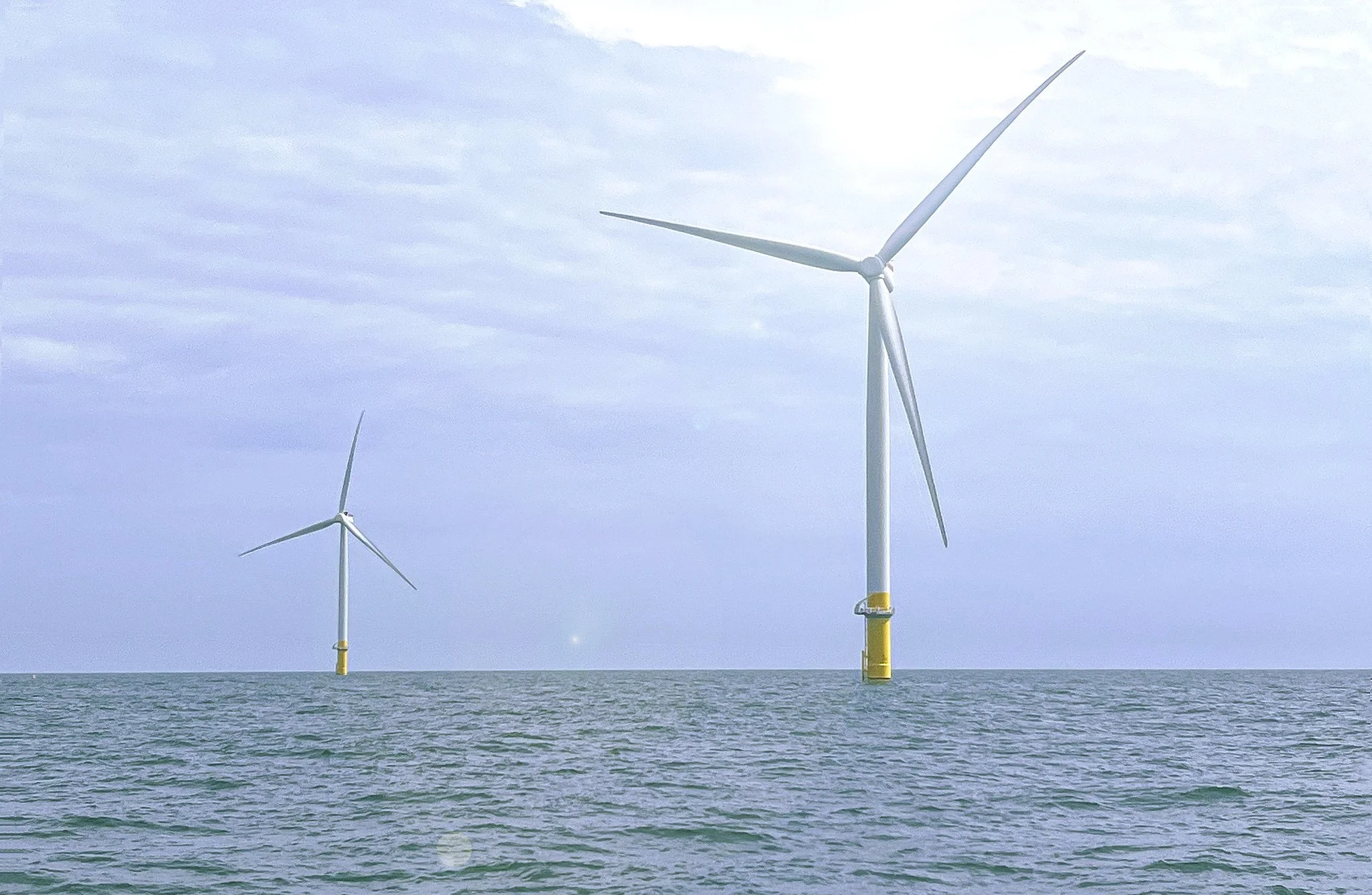
Two of Dominion Energy’s completed wind turbines, roughly 27 miles off the coast of Virginia Beach, VA. Photo by Stephen Boutwell.
Although abrupt, this decision aligns with Trump’s long-standing opposition to wind energy, which predates even his first term in office. He has repeatedly criticized wind farms on economic, aesthetic, and environmental grounds, dismissing them as inefficient, ugly, and harmful to both avian and marine life, a claim that has been consistently debunked. This executive order marks perhaps the most concrete policy action yet to translate those beliefs into national energy consequences.
The administration justified the halting of off-shore wind construction on the basis of national security. According to the Department of the Interior, offshore wind infrastructure poses potential risks to military radar systems. This threat, explored by a 2022 Georgia Tech study, is well-known, and technologies exist to help mitigate the radar interference caused by wind turbines. Despite this claim, the DoI has refused to elaborate further on how specifically these wind farms pose a threat.
Notably, the executive order applies exclusively to offshore wind development, explicitly exempting construction related to oil, gas, and mineral extraction. This has ignited further criticism from renewable energy companies and offshore wind advocates, who argue that the order reflects the administration’s political priorities rather than a consistent national security standard.
The five halted projects, located off the coasts of Virginia, Massachusetts, Rhode Island, Connecticut, and New York, are operated by four major energy companies: Dominion Energy, Avangrid, Orsted, and Equinor. Together, these projects represent an estimated $25 billion in investments, and the potential to power over 2.5 million homes as energy prices continue to rise. The rapid development of datacenters nationwide is urgently increasing the need for energy, as noted by Dominion Energy officials, and offshore wind development is consistently cited to be an effective and reliable way to provide for this demand.
As legal battles ensue, early decisions by some federal judges shed cautious hope for the continued development of the halted projects. As of late January, three federal judges have ruled in favor of Dominion Energy, Orsted, and Equinor to resume construction off the shores of Virginia, Rhode Island, and New York, respectively, citing the executive order as “arbitrary and capricious”. Despite these early judicial wins, the court decisions are only temporary, leaving room for more pushback from the administration.
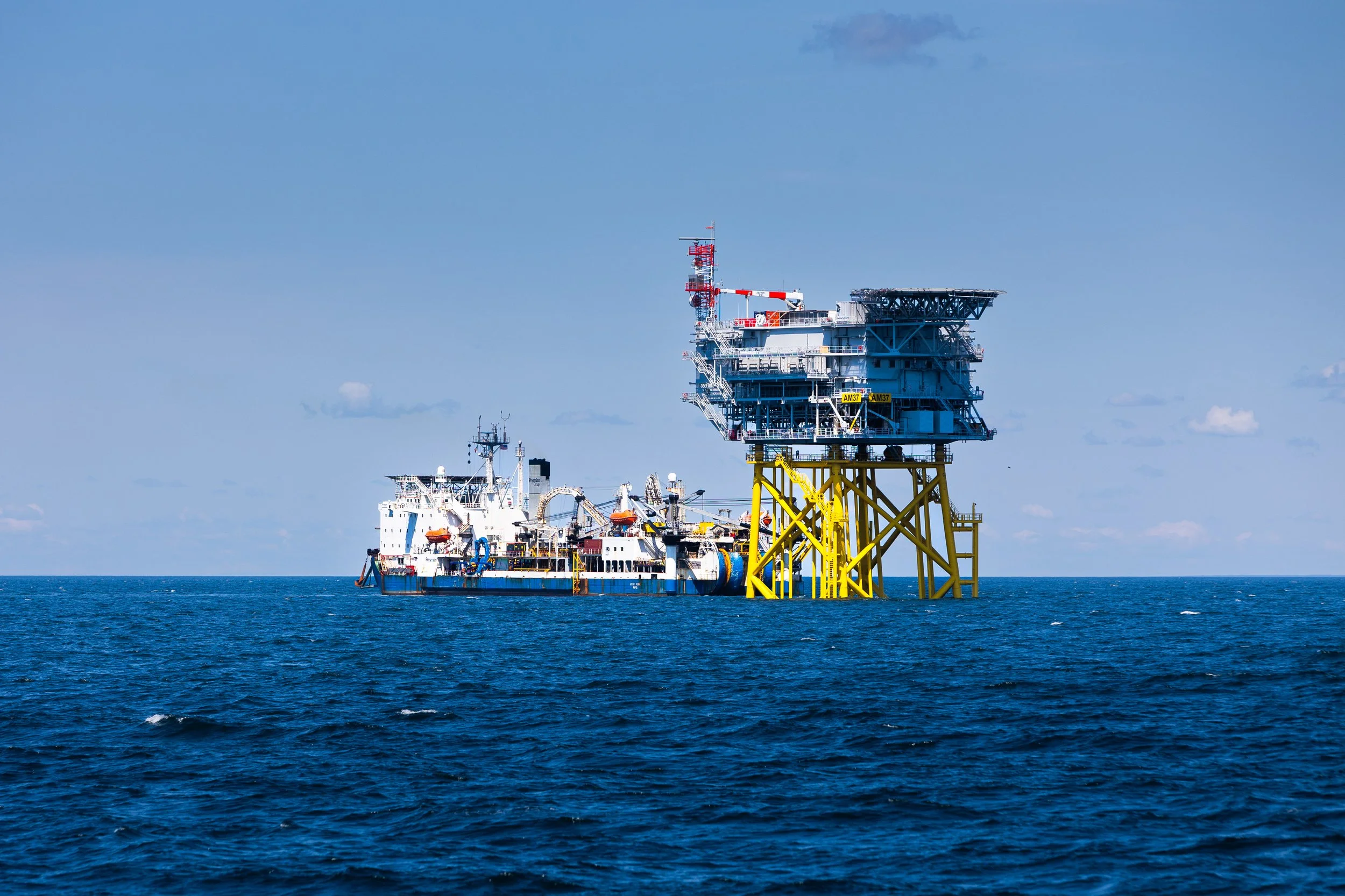
Construction of a wind turbine for Avangrid’s project, off the coast of Massachusetts. Photo by Eric Haynes.
Uncertainty remains as court hearings are set to continue through the Winter. The U.S. has successfully created a climate of instability regarding renewable energy development, as solar and onshore wind projects have come under fire as well. Some experts have argued that even if the offshore projects, which are nearing full construction, are completed, the administration will have succeeded in disincentivizing the development of any more offshore wind. As U.S. energy policies remain unpredictable and inconsistent, will offshore wind development become a distant memory, or will it manage to weather the storm?