
Artificial Reefs: Building Solutions to our Past Mistakes
By Anne Marie Zink, Marine Biology ‘30
Coral reefs worldwide are dying at an accelerating pace from the stresses of global climate change and marine pollution, and their continued existence is in jeopardy. The Great Barrier Reef, the world’s largest coral reef system and a renowned biodiversity hotspot, has experienced declines in coral coverage up to 70%.Corals are cornerstones of marine ecosystems, harboring 25% of all marine species and supporting the economy, food, and coastal protection of at least 500 million people. Yet, corals are particularly sensitive to changes in climate and water quality, and their ability to expand and regrow is limited.
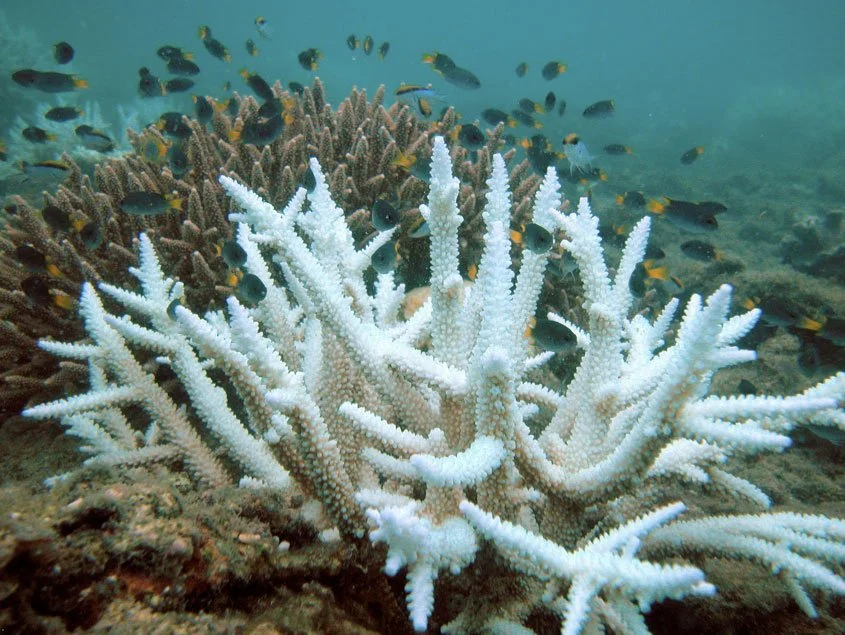
Bleached branching coral compared normal branching coral in the background in the Great Barrier Reef. Photo from Wikimedia Commons, Acropora.
While human-caused climate change and pollution may have caused the problem of coral decline, a novel human-made solution is attempting to reverse it – artificial reefs. These engineered structures are intended to provide stable reef foundations and aid coral regrowth. Artificial reefs are constructed from a variety of built materials including concrete or shipwrecks––any structure that corals can grip onto.
Repurposing old infrastructure and scrap is a common method of fostering artificial reefs, but this has shown mixed success. For example, dumping of old vehicle tires was popularized in the seventies as a low cost solution to waste management and deteriorating marine ecosystems, leading more than 100,000 tires to be discarded into the Puget Sound. Decades later, this false promise was found to actively harm marine life by leaching toxic chemicals into the water, and these consequences continue today.
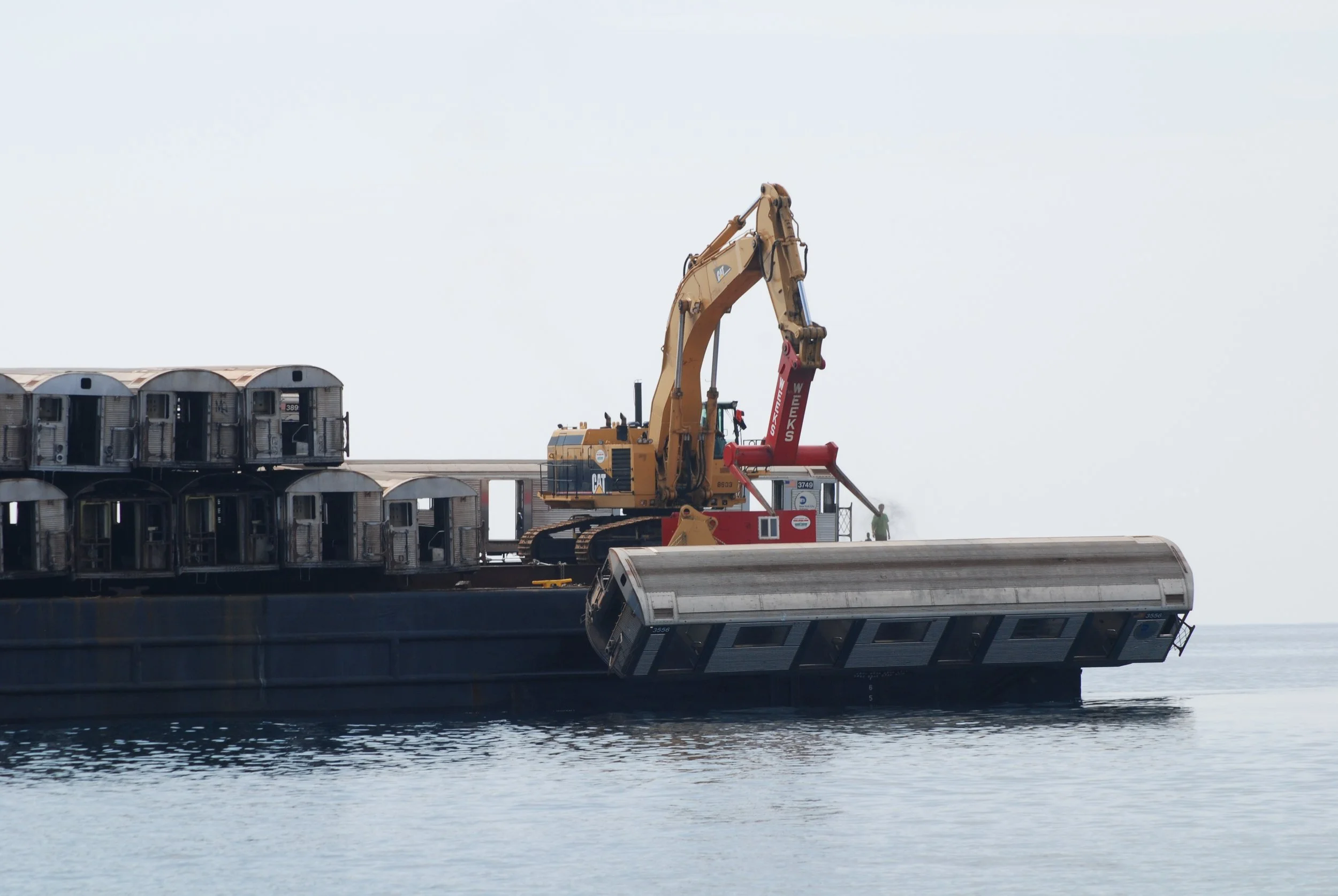
South Carolina's marine artificial reefs can be constructed from scrap materials like subway cars. Photo from Wikimedia Commons, South Carolina Department of Natural Resources.
Reef conservationists today understand that the construction method and materials used for artificial reefs is of paramount importance. Sourcing non-toxic materials and considering the physical footprint of sourced structures are key elements to a successful artificial reef project. Promising new technologies are emerging that combine 3D scanning and printing techniques to build artificial reefs from natural materials. By printing structures from a mixture of calcium carbonate and resin, then seeding them with live fragments of heat-tolerant coral strains, these new approaches speed up coral transplantation while minimizing construction costs and carbon footprint.
While the continuing decline of reefs worldwide is grim, these novel approaches to promoting coral growth and reef expansion provide a glimmer of hope. Artificial reefs may yet serve as a critical component to building human-made solutions to human-borne problems.